Two films have been produced to highlight the work which is being undertaken by Northumberland Wildlife Trust’s Biodiversity Boost Project for readers and nature lovers to enjoy. The Project was made possible by a £750,000 grant from the Species Survival Fund, in partnership with Defra and the National Lottery Fund.
The Species Survival Fund is a short-termed programme designed to support the creation and restoration of wildlife rich habitats in England. The Biodiversity Boost Project will help in this aim by increasing and enhancing the habitats across the wildlife charity’s Hauxley, East Chevington and West Chevington reserves as well as Northumberland Zoo over the last 18 months.
The project revolves around restructuring of plantation woodland, reedbeds and waterways as well as creation of species rich grassland, a wildflower meadow and wetlands areas. Partners of the project include EcoNorth, Flexigraze and Northumberland Zoo.
- A19 crash LIVE: Road closed in both direction after ‘serious’ crash
- Two taken to hospital after collision on the A1 in Northumberland
The project also hopes to connect local communities with nature through a range of volunteer tasks, events as well as physical improvements on the reserves such as the installation of two new hides, wildlife cameras and enhancing access through the creation of new footpaths and bridleways. Some of the project’s plans include the introduction of a small herd of goats in East Chevington in the area for the Lesser butterfly orchids and the introduction of Exmoor ponies and highland cows that have been employed to help the creation of the wildflower meadow in Hauxley.
Both films were produced by Brain Cosgrove and his team from Collingwood Arts and Media College in Morpeth and Helen Walsh who is the Wildlife Trust’s Biodiversity Boost Officer. Helen said: “Looking back through all the footage we’ve collected over the last 20 months we can really appreciate the changes that have been made and the work that has gone into delivering this project.”
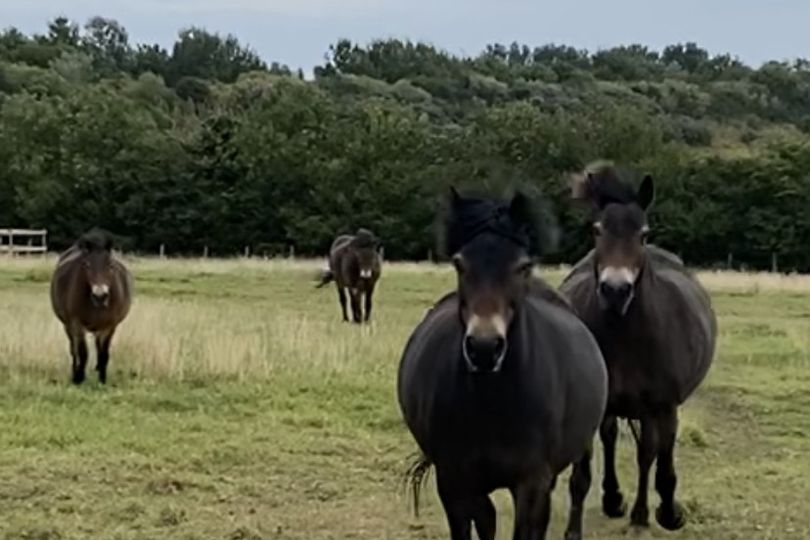
Lee Rankin, Druridge Bay Biodiversity Boost Officer, said: “It’s a perfect partnership, everyone gets something out of it. It’s a good way to reconnect with nature.” The first film offers an overview of the West Chevington reserve which is one of the wildlife charity’s most ambitious lowland recovery sites in the north of England that forms an integral part of the Trust’s fight against climate change.
Future plans for the area, which was a former opencast mine site that now consists of conifers, mixed woodland, grassland and arable land, includes the grassland and woodland to become home to a free ranging herd of cattle. The second film focuses on grazing which gives a potted history of grazing across the natural Druridge Bay landscape before coming up to date with details of several of the wildlife charity’s Flexigraze conservation projects.
Traditionally natural landscapes would have been shaped by large herbivores such as elk, aurochs and wild ponies which grazed on the vegetation but due to extinction or being absent from the landscape, these roles have been filled by humans or machines. Lee said that using goats for: “specialised grazing is less intensive and more sustainable” for the wildlife and natural areas, helping the eco system from the plants to insects to birds.
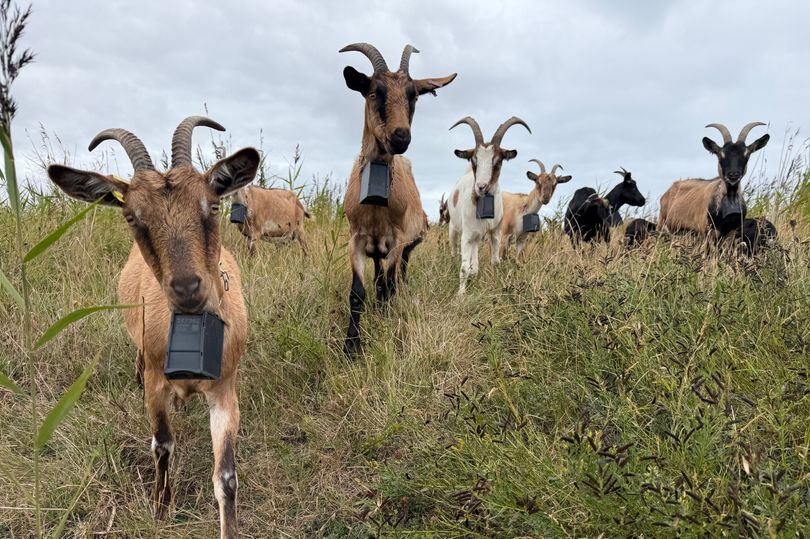
The animals are fitted with GPS ‘NoFence’ collars which are able to draw and create invisible fences that the livestock can not cross which can be used to exclude the animals from areas that need to be protected as well as tracking the animal’s grazing habits and behaviours. The hope of this project is to continue to maintain and improve habitats on our Druridge Bay reserves in a more natural way with far less human intervention.
The highland cattle and goats already on the reserves are already proving to be a great addition for visitors which can also be viewed on the films. Lee said the films are: “Another really good way to communicate with the public. A two minute video can say a lot more than pages of text, being able to see what the animals and the staff do to help.”
This carries on from previous work done last year for the project in the East Chevington reedbeds, which are some of the largest in Northumberland, that were planted after the restoration of the East Chevington Opencast Coal site that closed in 1994. The quality of today’s reedbeds are often affected by pollution caused by agriculture runoff.
The work was done by Derrick Emms from The Sustainable Water Company cut channels within the reeds in the reserve’s south pool to reconstruct reedbeds suitable for a range of species including bitterns, small brown striped birds. As the reeds were removed by their rhizomes, underground stems of the plant that stores its nutrients, this allows them to be successfully moved to the north pool to increase the reeds in that area and reduce wave action on the lake.
The footage from the films include the goats grazing on the East Chevington reserve, an interview with Stephen Comber, Flexigraze manager and footage of Exmoor ponies and highland cows. Helen said: “We hope people take some time to enjoy our short little films.”
Did you know you can make lauriebrown.neta preferred source of North East news in Google, which will mean you get more of our breaking news, exclusives, and must-read stories straight away? Here’s more information about what this means and how to do it – you can also do it straight away by clicking here.






 Bank SWIFT Code | agus setiawan | kodepos | jember explore | frasmedia | belajar ngeblog