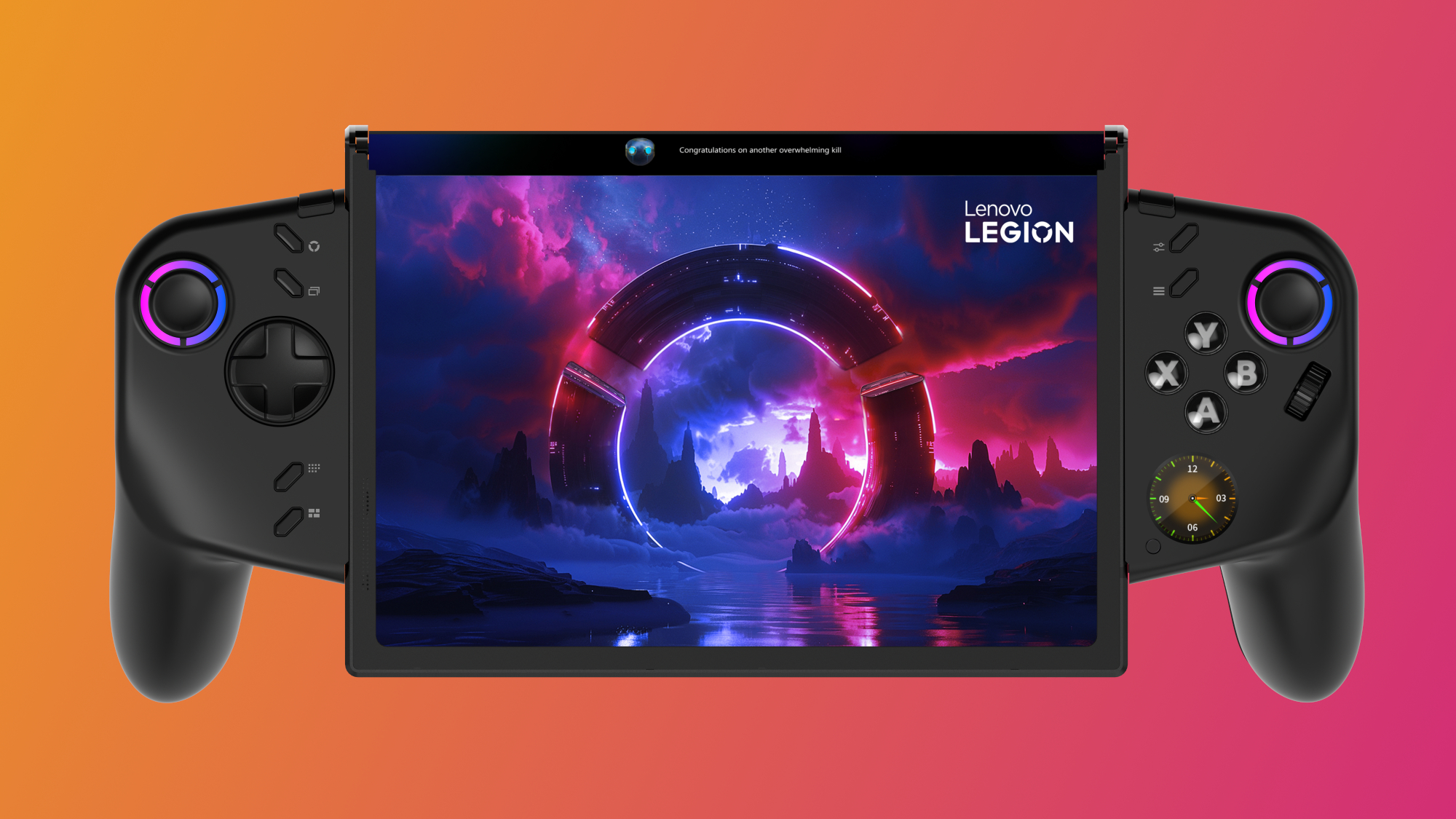
Gaming handheld? 2-in-1 laptop? This is Lenovo’s Legion Go Fold concept.

Lenovo’s Legion Go S and Legion Go 2 are two of our favorite gaming handhelds on the market right now, serving different types of users who want either a more portable design or a more powerful experience.

Unafraid as always about the evolution of form factors, Lenovo brought a new gaming handheld concept to MWC 2026. It’s unlike anything I’ve seen, and I’m confident I’m looking at a design that a lot of competitors will eventually copy.

The Legion Go Fold, as it’s known, is Lenovo’s most exciting concept device shown off this year. It’s essentially an amalgamation of the Legion Go 2’s detachable controllers, the ThinkPad Fold’s folding screen (albeit at a smaller size), and the Surface Pro’s 2-in-1 laptop design with stand and detachable keyboard.

What is Lenovo’s Legion Go Fold concept and how does it work?

It’s clear from what we’ve already got our hands on that Lenovo isn’t exactly sure where it’s taking this concept device, but it certainly is intriguing. It operates in four primary setups: three for gaming and one for regular productivity (or more gaming with a keyboard and mouse).

Here’s how Lenovo lays it out. A standard handheld mode sees the controllers attach to the side of the pOLED (plastic OLED) display, which itself is folded over into a 7.7-inch format. Consider this to be the “portable” way to play your favorite games.

👉 Lenovo Legion Go 2 vs Legion Go S: Which is better?

With the controllers attached in the same manner to the sides of the display, the screen itself can be folded up to its full vertical size, effectively giving you two screens stacked on top of each other. One for streaming and one for gaming? Nice. Lenovo calls this vertical split-screen mode.

Lenovo wasn’t satisfied with letting you use the screen vertically with controllers attached. In horizon full-screen mode, you can detach the controllers, rotate the screen 90 degrees, then reattach the controllers. This gives you a massive 11.6-inch display on which to game.

And, finally, because an 11.6-inch display is just begging to be used as a regular PC screen, expanded desktop mode sees a keyboard, touchpad, and folio stand connect to the horizontal display to become a 2-in-1 PC for gaming, streaming, and productivity.

The concept device runs on an Intel Core Ultra 7 258V CPU, and it has 32GB of RAM. A 48Wh battery powers the device. It’d be great to see Intel’s Core Ultra Series 3 “Panther Lake” chips with upgraded iGPU inside when (or if) the product makes it beyond a concept stage.

How do the Legion Go Fold’s controllers work?

We got our hands on the Legion Go Fold’s controllers to see how they feel, and we ultimately had no complaints. They’re ergonomically sound with larger grips, and the thumbsticks — ringed with RGB lights — are symmetrical.

One thing that stands out is a small LED display that you can use to display several different readouts, like a clock, while you game.

The controllers are designed to slide on and off with ease, just like in the Legion Go 2. When disconnected from the main display, they can be joined again with an extra piece of hardware, effectively creating a standard gamepad. This extra middle portion can also serve as a stand for one controller, which itself can be used as a mouse.

I wish I had a date to share regarding an actual release, but the Legion Go Fold is still firmly a concept device that might not ever come to market. Still, it’s a great representation of Lenovo’s willingness to evolve PC form factors.

What do you think about Lenovo’s Legion Go Fold concept handheld?

Do you think Lenovo is onto something with its Legion Go Fold concept? Is it something you can see yourself using? Let me know in the comments section!

Join us on Reddit at r/lauriebrown.netto share your insights and discuss our latest news, reviews, and more.

Like this article? For more stories like this, follow us on MSN by clicking the +Follow button at the top of this page.

These 7 everyday items are quietly shrinking UK hallways – organisers say move them today instead

In a typical UK hallway, shoes, coats and storage benches can quietly turn a narrow corridor into an obstacle course. Professional organisers reveal seven space‑wasting culprits – and the simple shifts that change how your entrance feels.

You step through the front door and before you have even taken your shoes off, you are dodging piles of trainers, school bags and a storage bench that no one actually sits on. For many UK homes, the hallway is tiny, busy and permanently on the brink of chaos.

Professional organisers say the issue is less about square footage and more about which objects are allowed to live there. Strip it back to the right things and even a narrow corridor can feel lighter and easier to use; the surprise is which everyday items are quietly wasting the most space.

Shoes and coats that never leave your hallway

Ask any professional organiser where hallway clutter starts and shoes will be near the top of the list. Jo Jacob, founder of home organisation company Benella, told Good Housekeeping: “Shoes that aren’t in current rotation”.

When every pair you own ends up by the front door, the floor disappears and getting out of the house turns into a daily hunt. The simple fix is to keep only the pairs you wear most days in the hallway and move everything else to bedroom wardrobes, under bed storage or an understairs cupboard.

Coats are just as guilty. Helen Dyson tells clients, “Coats are another big one,” when she finds every jacket, school blazer and long-forgotten raincoat still hanging by the front door.

Organisers suggest treating that rail or set of hooks as prime real estate. Keep one or two current, weather-appropriate layers per person in the hallway and rotate the rest to a bedroom or spare-room rail, so you are not fighting through a wall of fabric each time you leave.

The aim, the organisers say, is not a perfect show home but a hallway that works. As Jo Jacob puts it, “Only daily essentials should live there, and everything else needs a proper home beyond the front door.”

Bulky furniture and overdone storage that steal floor space

Large pieces of furniture feel reassuringly useful, yet they can swallow a narrow entrance. Jo Jacob warns that “They look lovely in magazines but, in a typical UK hallway, they steal precious walking space and turn a flow area into an obstacle course.”

Organiser Emma Kenwrick-Meehan sees the same issue with benches that double as chests. As Emma Kenwrick-Meehan notes, “Deep storage benches can be problematic in narrow hallways,” because they tend to collect dropped bags and laundry rather than actually being used as seats.

Then come all the baskets and boxes bought with good intentions. Helen Dyson often sees people try to fix the chaos by buying yet more containers. “There’s often an urge to overbuy storage solutions, but that can actually be part of the problem,” she explains.

・Swap deep console tables for slim shelves or wall-mounted ledges.

・Choose a shallow shoe cabinet instead of a bulky storage bench.

・Limit hallway baskets to a few clearly labelled jobs, not catch-alls.

Children’s gear and ‘in-between’ items taking over the hallway

For families, the mess multiplies fast. “Shoes kicked off wherever they land, school bags dropped by the door and coats thrown over the nearest chair are the biggest patterns I see,” says Emma Kenwrick-Meehan.

Organisers encourage parents to give each child a clear parking spot: a low hook for their bag, a crate or cubby for shoes and a specific place for PE kits or musical instruments. When every item has a simple, reachable home, children are far more likely to use it, especially if you build a quick reset into the after-school routine.

Paperwork and parcels are another quiet space-waster. Helen Dyson talks about the “in-between” things that hover by the door. “Parcels waiting to be returned, mail that’s piled up unopened, and things borrowed from friends that are sitting there as a reminder to give back,” stack up when they have no clear, short-term home.

A small wall rack or tray for post and returns keeps these temporary items contained, as long as you clear it regularly. Professional organisers favour a short sweep every day or two to file, recycle or move things on, so your hallway stays a launchpad for the day rather than a storage room you squeeze through.

Gardeners are only just realising these 12 vivid blue flowers turn borders into hummingbird magnets till autumn

From agapanthus to salvias, blue perennials can turn a simple border into a hummingbird magnet from July to October. Learn which varieties keep nectar and colour flowing.

Picture a border of vivid blue flowers visited by tiny birds, from high summer right into the first cool evenings of autumn.

It is not the colour that hooks hummingbirds first but the steady supply of nectar inside tubular blooms, and the best ‘service stations’ for migrating birds happen to be blue.

Why blue flowers help

Hummingbirds specialise in sipping from long, narrow tubes or bells that most insects cannot reach, using equally long beaks and tongues to mine nectar reserves.

Blue asters, phlox, salvias, lobelias and campanulas blooming from mid-summer into autumn offer exactly that, taking over as earlier perennials fade. They leave Québec between late August and early September to winter in Central America, so flowers that keep going into autumn help them build fat reserves.

The range of blue, nectar-rich perennials is so wide that nurseries base growth plans on them; one founder talked of working “with the exploration of new European markets and the strengthening of our brand portfolios”, said Pascal Griot of Promesse de Fleurs, cited by La Gazette France.

Far from the flowerbeds, the word colibri has inspired a social grocery in Nantes, where food supports local residents. “Access is reserved for people who have been living in Nantes for more than three months, subject to means-testing and after a social assessment”, explained CĂ©cile ClĂ©ment, social worker and coordinator of the grocery. “Beneficiaries can do 25 euros of shopping each week, that is 100 euros per month, and pay only 10 euros”.

Client Philippe put it bluntly: “These days, for 20 euros at Lidl, you do not get much. This help will let me put some money aside to buy a sofa”. Martine said she loves the atmosphere as much as the prices, saying “I like coming here. Beyond the shopping, we come to have a coffee and chat”.

12 blue flowers for hummingbirds

Back in the garden, blue perennials feed hummingbirds from summer into autumn while pleasing butterflies and bees.

Key candidates include:

・Agapanthus ‘Brilliant Blue’

・Phlox paniculata ‘Blue Paradise’

・Blue asters (Symphyotrichum)

・Stokesia laevis

・Salvia guaranitica

・Salvia farinacea

・Salvia azurea

・Salvia yangii (Russian sage)

・Campanula rotundifolia

・Penstemon ‘Electric Blue’

・Agastache ‘Blue Fortune’ or ‘Blue Boa’

・Lobelia siphilitica (great blue lobelia)

Agapanthus “Brilliant Blue” in zones 8 to 11 throws 2-foot stems of azure balls in moist, drained soil, while phlox “Blue Paradise” and blue asters Symphyotrichum novi-belgii or S. patens grow between 2 and 5 feet in zones 4 to 8 in sun or light shade.

Stokesia laevis in zones 5 to 9 forms 30 to 60 centimetre clumps of daisy-like blue blooms, and Campanula rotundifolia stays near 18 inches; blue anise sage Salvia guaranitica, mealy sage S. farinacea, pitcher sage S. azurea, Russian sage S. yangii, Penstemon “Electric Blue”, Agastache “Blue Fortune” or “Blue Boa” and great blue lobelia Lobelia siphilitica all flower in summer and autumn.

Planting and care tips

To make these blue flowers irresistible, group plants in clumps instead of singles and avoid double varieties that hide nectar from beaks.

Skip pesticides here and limit cats, letting salvias, phlox and asters combine with feeders as a natural buffet.

“We have to share!”, said Philippe, while Bassem Hasseh argued that “At the heart of the neighbourhood, the social grocery is a gateway to all kinds of services, and it is a place where we cross paths and meet”.

According to Simon Citeau, “As part of the overall BottiĂšre-Pin Sec project, residents expressed the need to work around food”, and “It is a subject that makes it possible to address other issues such as employment and childcare…”.

HONOR reveals robot phone that dances to music, plus chic foldable phone with long battery life

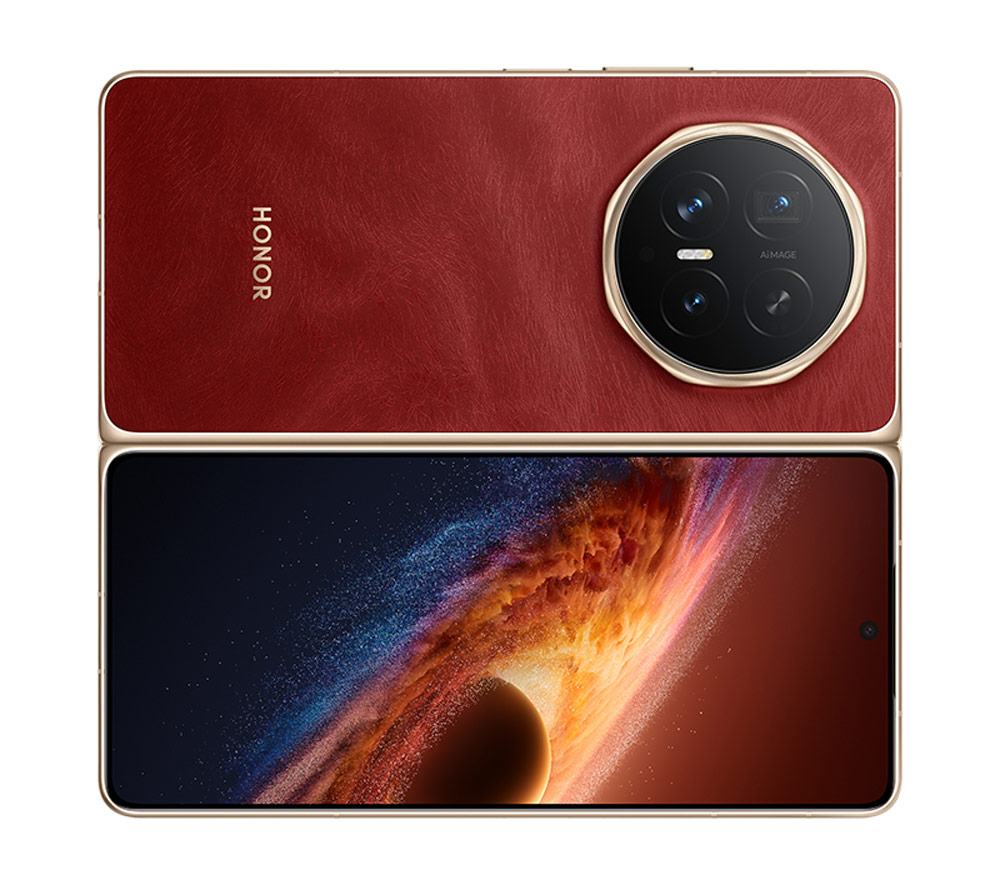
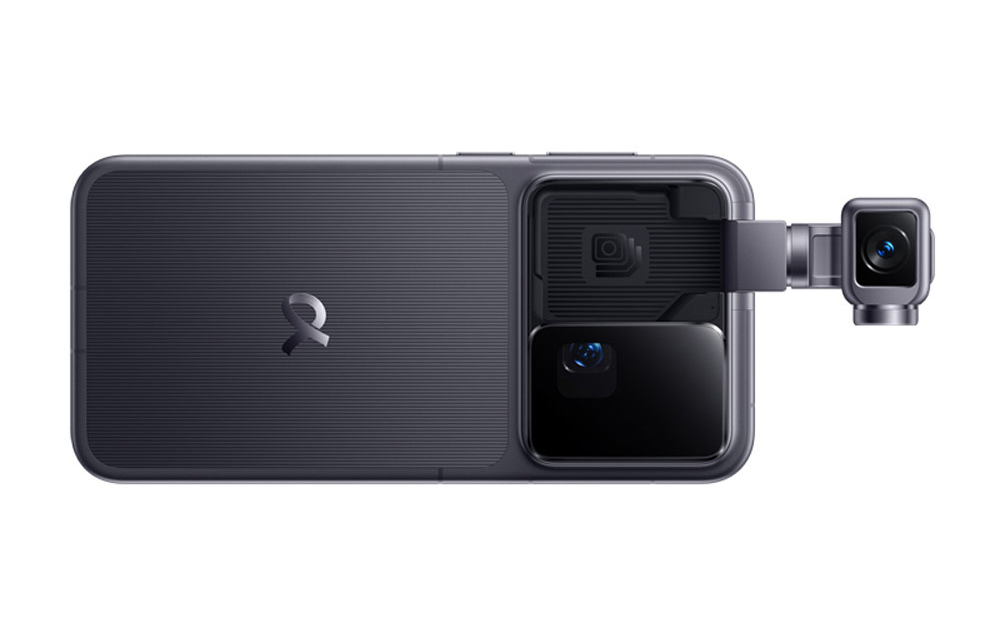
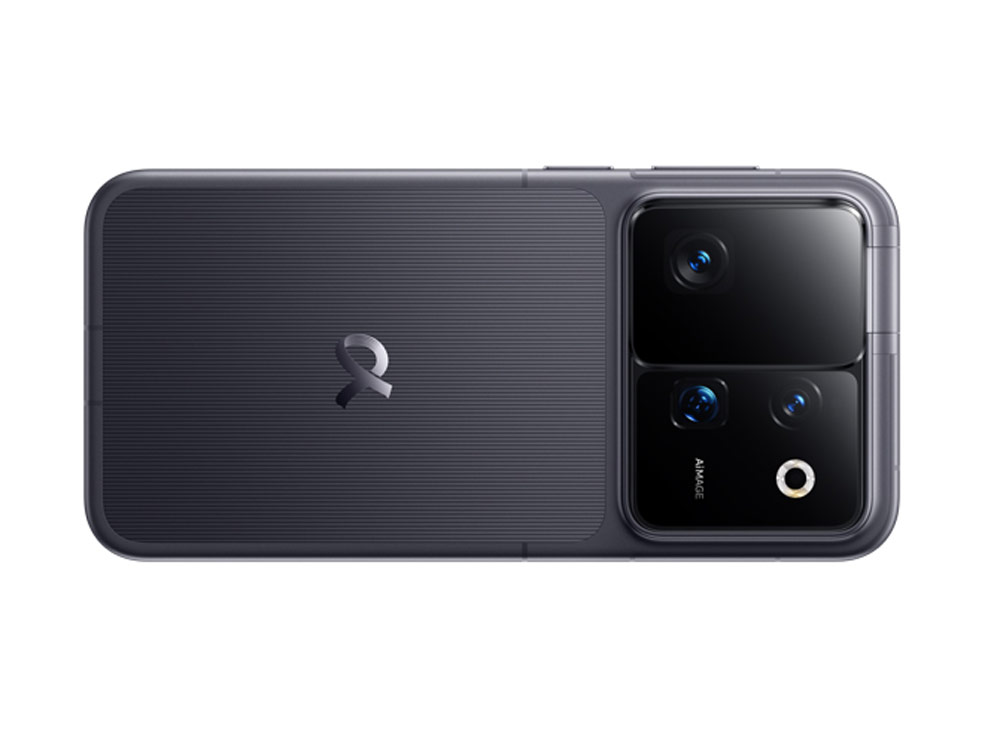
HONOR has used the run-up to the massive Mobile World Congress trade show in Barcelona to announce its latest foldable Android smartphone, the Magic V6, and (drum roll) the ground-breaking Robot Phone (above).

Let’s look at the Honor Magic V6 first, as this should be the first new smartphone to become available in markets outside China.

V for Victory?

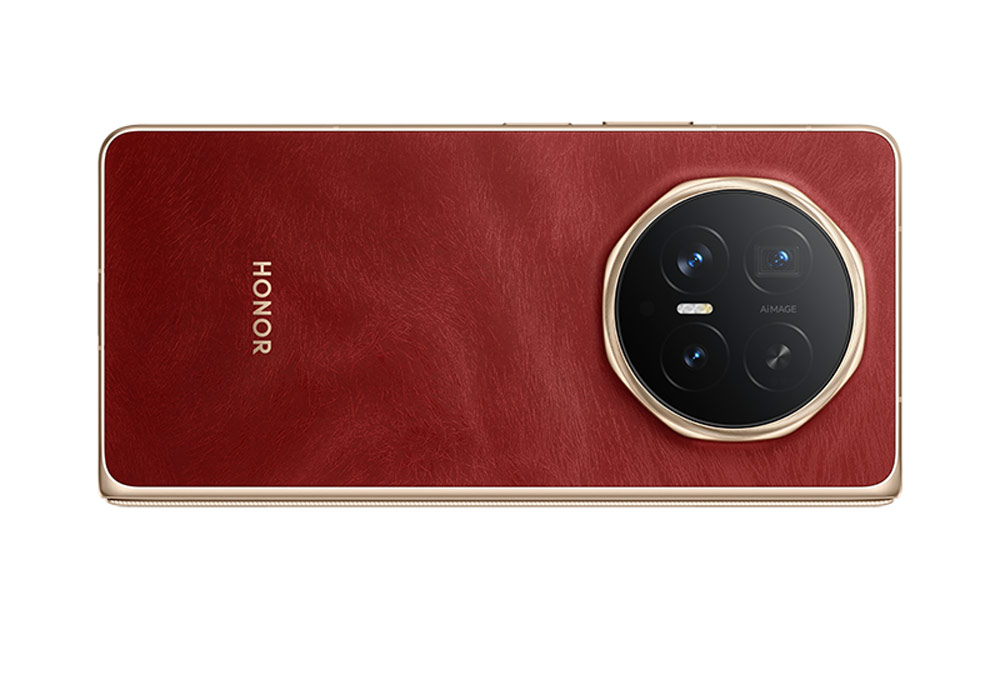
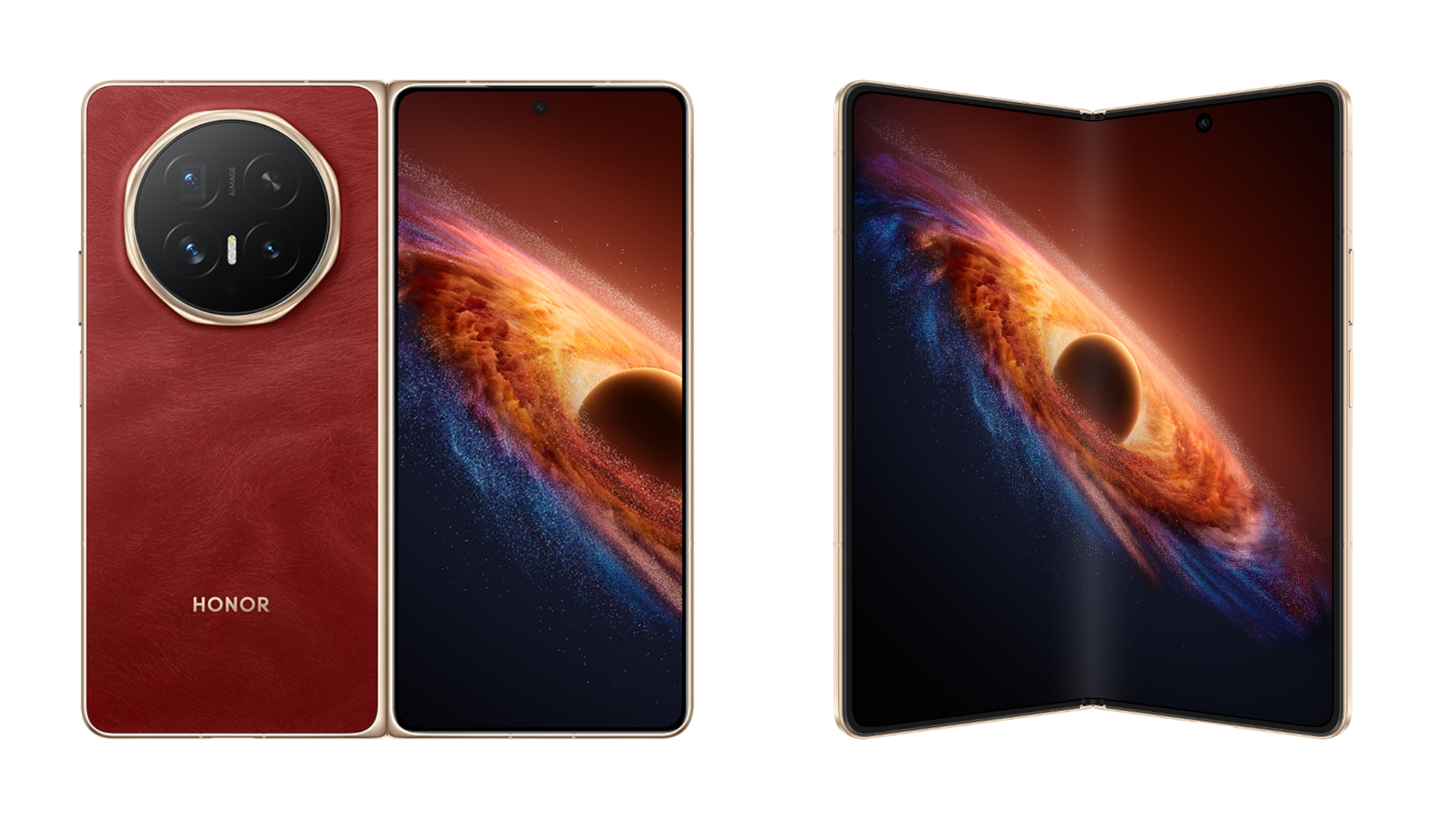
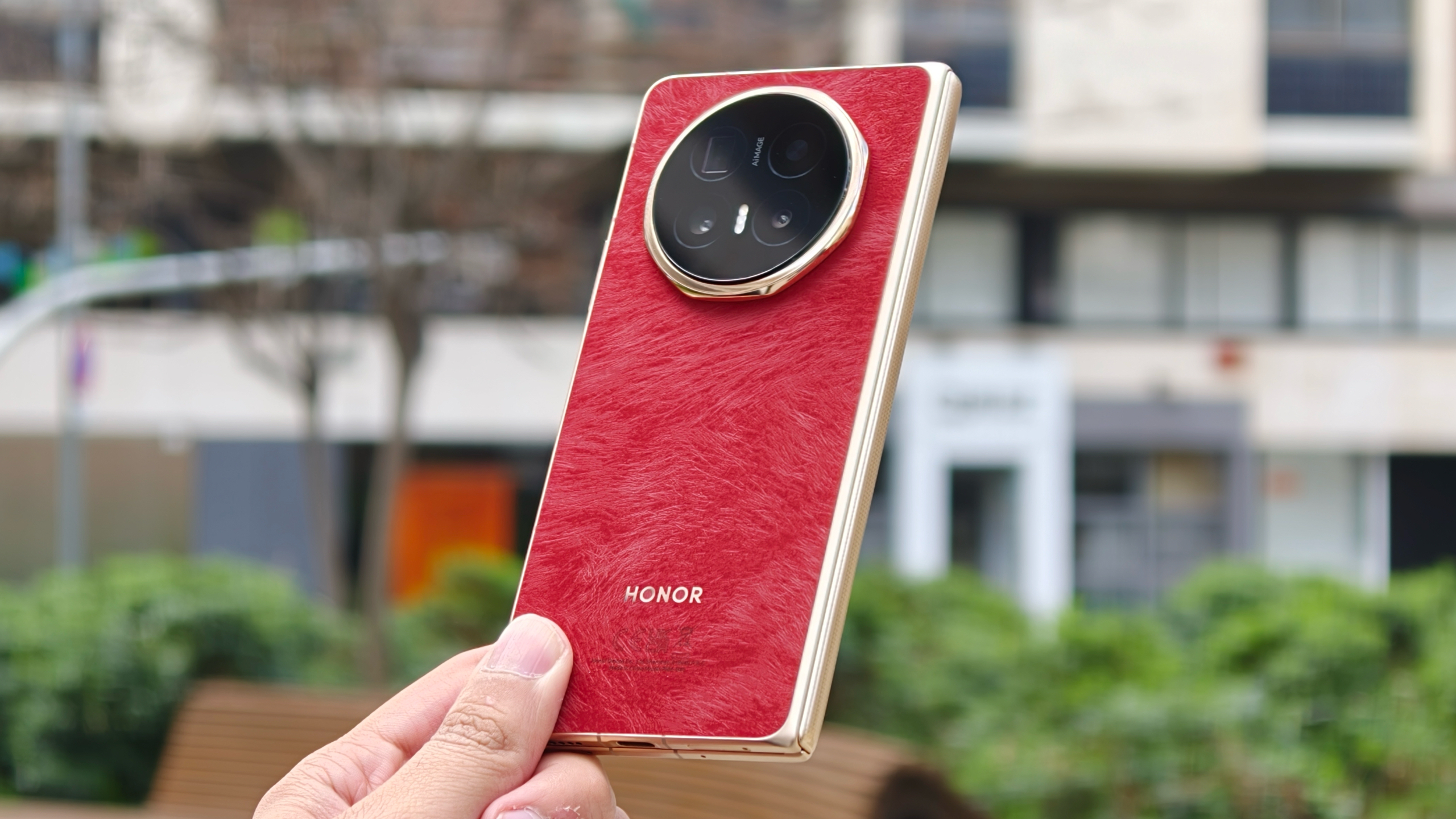
Described by HONOR as the ‘the pinnacle of foldable innovation,’ the stylish Magic V6’s key selling points include its advanced, long-lasting battery, super-slim dimensions and tough but light build.

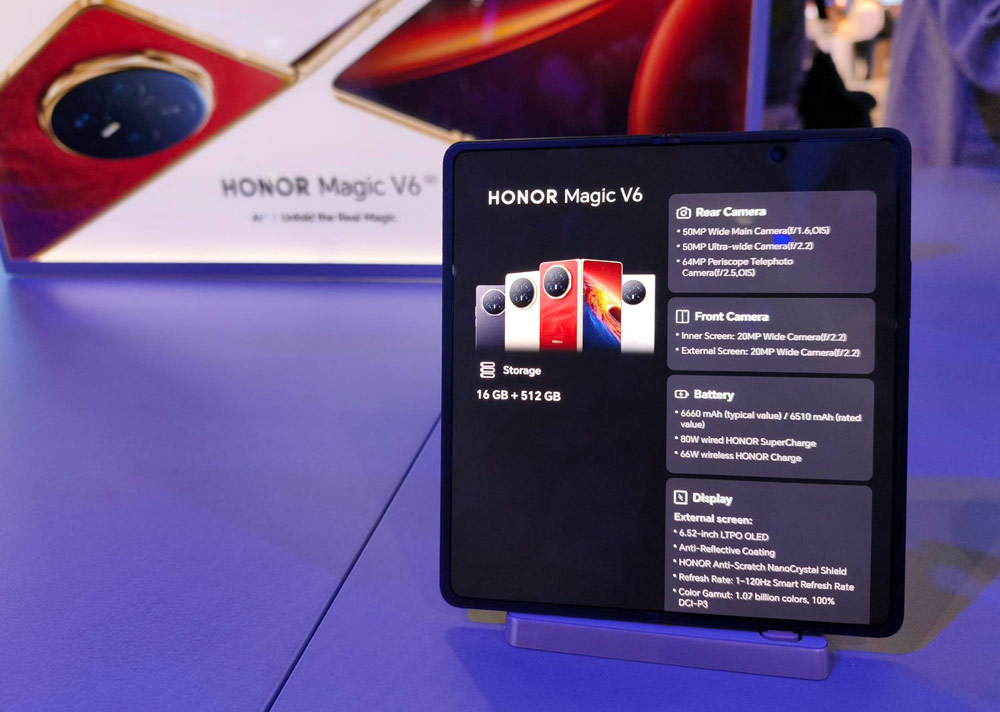
Indeed, HONOR has managed to squeeze a powerful 6,660mAh battery into the slimmest foldable phone body on the market (8.75mm closed profile). In other words, it’s the largest battery ever in an ultra-slim foldable phone.

The new Magic V6 phone also features dual flagship LTPO 2.0 screens, measuring 6.52 inches externally and 7.95 inches when unfolded.

These deliver adaptive 1-120Hz refresh rates and peak brightness of up to 6000 nits and 5000 nits respectively for HDR content. Including the battery, it weighs 219g (white) and 224g (black and gold).

The HONOR Magic V6 is also the first foldable phone powered by the Snapdragon 8 Elite Gen 5 chip.

HONOR Magic V6 camera specifications

HONOR claims the Magic V6 features the best telephoto-camera system on any foldable device. This is based on a 1/2-inch, 64MP telephoto sensor, with CIPA 6.5-rated image stabilisation. The AI-powered AiImage Colour Engine keeps images natural looking but punchy, with AI Cinema Colour enhancing video footage.

  • 50MP main camera, f/1.6 with optical image stabilisation (OIS).
  • 64MP periscope telephoto camera, f/2.5, 1/2 sensor, OIS
  • 50MP ultra-wide camera, f/2.2
  • 20MP front camera (inner and external screen)
  • 6.5 stop image stabilisation

Success hinges on it

The HONOR Magic V6 sounds very robust too, allaying a key concern of foldable phone customers. The phone’s body features materials used in sports car engines for example, while the hinge has been tested for half a million openings and closings – equivalent to a decade’s worth of use.

The HONOR Magic V6 also offers IP68 and IP69 water resistance, so as with the HONOR Magic 8 Lite released last year, this is a phone that will withstand more punishment than the average customer will ever inflict.

HONOR’s also made it easier for the new phone to communicate with Apple devices, presumably in order to lure current iPhone users over to Android; Apple iCloud folders can be accessed more easily, for example, and faster data transfer between iPhones and the Magic V6 is promised.

As yet there are no more details about the pricing and release of the HONOR Magic V6, but it’s promised in the second half of this year.

Aye, robot – Robot Phone puts the android in Android

The biggest razzmatazz at the press launch was saved for the announcement of the HONOR Robot Phone, however. This ‘new species of smartphone’ includes the world’s smallest micro motor, according to HONOR, which in turn powers the industry’s smallest 4DoF gimbal camera system.

In this context, 4DoF refers to ‘depth of freedom’ rather than depth of field – so as well as tracking objects you are shooting or filming, the gimbal system can turn just like your neck, and look from a range of angles.

HONOR claims it is the industry’s first 3-axis gimbal camera, and it’s a cute, fully retractable gizmo that got a lot of ‘seen it all before’ tech journalists at the press launch very excited. With this ingenious mini-motorised gimbal camera system in place, there is no need for a bunch of cameras around the back of the phone.

All well and good, but how can the Robot Phone actually be used? HONOR gave the examples of the Robot Phone following the natural movements of your head when you are making a video call, or even nodding and shaking its head when you ask if it a new outfit or hairstyle suits you – as you’d expect, all this neat functionality is powered by AI, which is deeply embedded in the phone’s DNA.

Apparently the gimbal can even dance to the beats of music or do backflips!

Strong emphasis on video

When it comes to photography and video, exact details are sketchy at this stage, but we understand the Robot Phone will feature a 200MP sensor. The emphasis at the press launch was much more on video recording rather than stills photography, with HONOR promising a motion-sensing AI stabilisation system for rock-steady footage.

Meanwhile, AI Object Tracking enables the Robot Phone to intelligently follow subjects in real time and AI SpinShot supports 90 and 180 degree rotational movement for fluid video recording, even when shooting one-handed.

HONOR also promises editing video will become easier as it continues to develop the AI editing tools in its phones – this makes a lot of sense when you consider the popularity of video amongst all manner of content creators, and the relative complexity of a lot of commercial video-editing software.

Again, there is no confirmation of the HONOR Robot Phone’s pricing and exact availability, though it is also promised for the second half of this year. So it’s not just a fancy prototype or marketing stunt to drive visitors to HONOR’s stand at Mobile World Congress


Keep coming back for more from Mobile World Congress

The Mobile World Congress show officially opens tomorrow, when I will be able to reveal more about HONOR’s latest phones and robotic innovations!

The post HONOR reveals robot phone that dances to music, plus chic foldable phone with LONG battery life appeared first on Amateur Photographer.

‘Lost City’ deep in the Atlantic is like nothing else we’ve ever seen on Earth

The reality of what lies within our oceans has fascinated people since time immemorial, so it’s no wonder we’ve created countless myths about the watery depths.

But step aside, Atlantis, scientists have discovered a real Lost City beneath the waves, and this one is teaming with life.

The rocky, towering landscape is located west of the Mid-Atlantic Ridge mountain range, hundreds of metres below the surface of the Atlantic Ocean, and consists of massive walls, columns and monoliths stretching more than 60 metres (200ft) tall.

To be clear, it’s not the home of some long-forgotten human civilisation, but that doesn’t make its existence any less significant.

The hydrothermal field, dubbed the “Lost City” upon its discovery in the year 2000, is the longest-lived venting environment known in the ocean, Science Alert reports.

Nothing else like it has ever been found on Earth, and experts think it could offer an insight into ecosystems that could exist elsewhere in the universe.

For more than 120,000 years, snails, crustaceans and microbial communities have fed off the field’s vents, which spout out hydrogen, methane and other dissolved gases into the surrounding water.

Despite the absence of oxygen down there, larger animals also survive in this extreme environment, including crabs, shrimps and eels. Although, they are, admittedly, rare.

The hydrocarbons produced by its vents were not created by sunlight or carbon dioxide, but by chemical reactions way down on the seafloor.

This is how life on our planet may have originated some 3.7 billion years, and how it could be formed on others.

“This is an example of a type of ecosystem that could be active on Enceladus or Europa right this second,” microbiologist William Brazelton told The Smithsonian back in 2018, referring to the moons of Saturn and Jupiter respectively.

“And maybe Mars in the past.”

The tallest of the Lost City’s monoliths has been named Poseidon, after the Greek god of the sea, and it measures more than 60 metres high.

Meanwhile, just northeast of the tower, is a cliffside where the vents “weep” with fluid, producing “clusters of delicate, multi-pronged carbonate growths that extend outward like the fingers of upturned hands”, according to researchers at the University of Washington.

There are now calls for the Lost City to be listed as a World Heritage site to protect the natural phenomenon, particularly given humans’ propensity to destroy precious ecosystems.

Back in 2018, it was confirmed that Poland had won the rights to mine the deep sea around the thermal field.

And whilst, in theory, the Lost City would not be touched by such works, as Science Alert notes, the destruction of its surroundings could have unintended consequences.

That’s not all! Here’s the best of our science coverage:

  • Mutated tribe can swim to bottom of ocean after developing ‘sea nomad gene’
  • Scientists discover that people who live past 90 have key differences in their blood
  • A scientist may have just proven that we all live inside a computer simulation
  • Massive ocean discovered beneath the Earth’s crust containing more water than on the surface
  • Scientists have discovered two giant mystery structures lurking under Africa
  • Scientists discover continent that had been missing for 375 years
This article was first published on November 20, 2023

Sign upfor our free lauriebrown.netweekly newsletter

Have your say in our news democracy. Join the conversation about this article in the Comments./strong>

7 items professional organisers say are wasting space in your hallway and how to solve it

Hallways are more than just a way to get from point A to point B. Often they’re the first room we walk into when we enter our homes. The entryway that sets the tone for the rest of the house. So, why are they so full of crap?

Our hallways are just covered in nondescript stuff. Primarily things that don’t need to be there and are just a great big waste of space. From capacious bag collections to overbearing puffer coats strewn on what remains of a coat rack. Random sports equipment stack up on top of awkward bulky furniture. The hallway and entryways of our homes are a hot bed for clutter, a dumping ground for whatever is in our hands when we walk through the door that we just don’t want to deal with. The effect: your home feels dark, cramped and disorganised.

I’ve been chatting to professional organisers to find out how we can regain this space by figuring out what needs to go. Their job is to advise their clients on how to make the most of their space, and now I’m sharing those top tips with you. Here are the items professional organisers say are wasting space in your hallway.

Shoes

Jo Jacob, founder of home organisation company Benella, had one item on the top of her list for what to clear from the hallway and that’s: ‘Shoes that aren’t in current rotation’. In her work, she sees how clothing items such as shoes can become an afterthought, dumped and forgotten. We may think this is the most organised, logical spot for them but, in reality, they’re just creating visual clutter.

‘If shoes, bags and coats come in but never go back out or upstairs, the pile grows day by day until the hallway feels permanently chaotic making people feel stressed when they inevitably aren’t able to find things.’ The key is to edit as you go to ensure it doesn’t get overwhelming. And store away those out-of-season items until you actually need them.

Too many storage ‘solutions’

A theme that often comes up when I chat to professional organisers is that the items we count on to help make the most of our spaces are often the things wasting the most of it.

‘There’s often an urge to overbuy storage solutions, but that can actually be part of the problem.’ says Helen Dyson from Clear Out Clutter. ‘Adding more baskets, boxes and benches doesn’t solve clutter if there’s simply too much coming into the space. In fact, more storage can sometimes just make it easier to keep more than you need.’ If we give ourselves spaces to fill, the likelihood is we will naturally fill them – and then some.

‘The simpler the system, the easier it is to maintain. A few well-placed hooks, a slim shoe rack and a small tray for post is often more effective than elaborate furniture,’ says Helen.

Storage benches

‘Deep storage benches can be problematic in narrow hallways,’ says Emma Kenwrick-Meehan from Home Nip & Tuck, who often finds these so-called storage solutions actually just encourage clutter. ‘They seem practical, but if they take up too much floor space or are rarely used for sitting, they quickly become somewhere to drop bags and laundry.’ Before you know it, you have a mountain of miscellaneous items and nowhere to sit.

Children’s items

If there’s a sure-fire way to ensure your hallways are full of clutter and just general stuff, it’s to live with children. ‘Shoes kicked off wherever they land, school bags dropped by the door and coats thrown over the nearest chair are the biggest patterns I see,’ says Emma. This isn’t to say us big kids are innocent, the little ones just have more things. Wellie boots, toys, scooters, helmets, PE kits – the list goes on. But the root cause of this waste of space is a shared one.

‘In most homes, the issue is speed. People come in, put things down and move on. Without a clear place for each item, those daily habits build up quickly.’ Having designated areas or containers for common items such as shoes, coats, bags etc is great way to build positive habits and, if you can teach everyone in the household to stick to them, including if not especially the kids, then you have a much better chance of keeping things organised, not to mention the school-run less chaotic.

Bulky furniture

We all know that hallways and entryways can become drop zones for miscellaneous items. But one item that’s a great source of wasted space and seems to get away with it by literally blending into the background, is furniture. ‘Deep console tables and chunky storage benches.’ Jo says are key culprits. ‘They look lovely in magazines but, in a typical UK hallway, they steal precious walking space and turn a flow area into an obstacle course.’

Coats

‘Coats are another big one,’ advises Helen. ‘I often see every coat the family has ever owned hanging up, including children’s coats that no longer fit. If it’s not being worn this season, it doesn’t need to live in the hallway,’ says Helen, and she’s spot on. Nothing says waste of space like a bulky puffer jacket in July. Be strict with yourself and put out-of-season items in storage, I promise you’ll feel the benefit immediately. Remember this is often the first place guests see when entering your home, so let’s brighten it up a little, shall we?

Luckily for us, Helen has some tips on how to achieve just that. ‘When a hallway is tight, it’s far better to utilise vertical wall space.’ she says. ‘Wall-mounted hooks, peg rails and slimline shoe storage keep the floor clear and allow the space to breathe. The goal is function without bulk.’

The ‘in-between’ items

Helen coined this phrase, for all those items that aren’t necessarily in the wrong place by being in the hallway, and yet they aren’t serving any real purpose and are definitely wasting space. ‘Parcels waiting to be returned, mail that’s piled up unopened, and things borrowed from friends that are sitting there as a reminder to give back,’ are all examples of this, says Helen. ‘ These small, temporary items quickly create a sense of chaos when they don’t have a clear, short-term home.’ To stop them piling up, deal with them as soon as you can, easier said than done, I appreciate, but it really is the only way. Work a daily (or every other day) sweep into your routine, when you can sort it all out and try to deal with and relocate items as they come into the home.

The pro’s top tips

Daily essentials only

‘Treat it like an area with purpose, not a storage room,’ says Jo, taking the strict approach when it comes to what deserves to take up space in our hallways. ‘Only daily essentials should live there, and everything else needs a proper home beyond the front door.’

Be intentional

Similarly, Emma reiterates: ‘Be intentional about what earns a place in the hallway. The space by the front door cannot store everything – keep only what is used daily and in season,’ she says. Bulky coats and wellie boots do not need a prime position all year round. ‘And make sure each person has a clear, realistic place to put their shoes, coat and bag. If the storage is full, something needs to be removed rather than added.’

Keep it minimal

The trick to an efficient hallway that not only looks good but also serves a purpose is all about keeping it simple, says Helen, stressing the important role this space plays in our daily lives. ‘Keeping your hallway minimal will significantly reduce stress when leaving the house. You won’t be racing around looking for keys, matching shoes or school bags buried under coats. A clear, organised hallway sets the tone for the day – calm in the morning and welcoming when you return home.’

The Honor Magic V6 sets a new foldable phone battery standard. I hope rivals quickly catch up

Honor is breaking all the rules with the Magic V6. Revealing the new flagship to a worldwide audience first, rather than giving China all the love as usual, shows the firm isn’t about to let Apple spoil the foldable phone party. Not without putting up a fight, anyway.

The outgoing Magic V5 already had Samsung and Google’s folding phones beat for battery, and was a lot easier to get hold of than compatriot Oppo’s effort. Its successor doesn’t just scoop the imminent Find N6, inevitable Samsung Galaxy Z Fold8 and rumoured iPhone Fold – it earns the title of World’s Thinnest Foldable, while also finding room to raise the battery capacity bar.

Having tried one out at Honor’s Mobile World Congress preview event, I’m convinced everyone else is going to have to work harder if they want to keep up.

How we test smartphones

Every phone reviewed on Stuff is used as our main device throughout the testing process. We use industry standard benchmarks and tests, as well as our own years of experience, to judge general performance, battery life, display, sound and camera image quality. Manufacturers have no visibility on reviews before they appear online, and we never accept payment to feature products.

Find out more about how we test and rate products.

It’s skinnier than ever

Design-wise Honor has stuck closely to the formula established by the Magic V5. The V6 has the same geometric rear camera island and similar proportions – only now those proportions are even slimmer. This phone is just 8.75mm when folded, not counting the camera bump, and only 4.0mm at its narrowest point when opened. That only a fraction of a millimetre less than a Galaxy Z Fold7, sure, but enough that Honor can call it the world’s thinnest.

This only applies to the white version, with the black, red and gold versions being ever-so-slightly thicker at 9.0mm folded and 4.1mm unfolded. Right now it’s unclear which versions are going global, or if some will be reserved for China; Honor is opening sales on home soil right now, but a worldwide launch (which unsurprisingly won’t include the USA) will probably happen in a few months’ time.

The Magic V6 also scores top honours for durability, with both IP68 and IP69 ratings. This is hands-down the best protection of any foldable, and bodes well for anyone worried about the flexible inner display being ruined by dust creeping into the hinge mechanism. Honor reckons the hinge is twice as strong as a car’s A-pillar, and the new design has helped make the crease even harder to see than the last-gen model.

You’re getting a 6.52in outer screen and a 7.95in inner one, each with high refresh rates, OLED colours and contrast, plenty of resolution and impressive peak brightness. I’ve been told to expect 6000 nits for HDR content on the outer screen, or 5000 on the inner one – which has also been given a new anti-reflection coating to dial out distractions.

A high pixel count camera trio

The rear camera bump doesn’t bulge out dramatically from the main phone body, but Honor has still found a way to slot three high pixel count sensors inside it. You’re getting a 50MP main snapper, 50MP ultrawide, and a 64MP telephoto.

That’s not at all removed from the outgoing Magic V5, so while I’ll have to wait for a full review to deliver a verdict on image quality, I’m expecting similar results. That should still mean a commendable performance for a foldable phone, with Honor’s generative Superzoom image processing stepping in when you zoom beyond 30x.

It’s also great to see Honor putting real work on the software side in general, to make better use of the Magic V6’s large inner screen – and not just with a bunch of AI-infused apps. Although those are there too, of course. Google Gemini has been integrated throughout MagicOS, letting you create calendar appointments from onscreen content, and you can aparently summarise missed parts of meetings with an “AI meeting assistant”.

More interesting is how heavily everything integrates with Apple. The Honor Connect app lets the phone act as a second screen for your MacBook, browse Keynote, Pages and Numbers files saved to iCloud, and tap to share directly to a Mac or iphone. It can also control a pair of AirPods’ more advanced features like noise control, and share notifications simultaneously with an iPhone and Apple Watch.

The new battery capacity king?

The outgoing Magic V5 already had Samsung and Google’s foldables beaten for battery capacity, but Honor is really sticking it to those rivals in 2026. The worldwide Magic V6 will land with a 6600mAh cell, which is as big as it gets in a book-style foldable. A Chinese variant climbs even higher to 7000mAh. I’m expecting both versions to deliver a comfortable two days of typical use, no matter which of the two screens you spend the most time with. 80W wired and 66W wireless charging are suitably nippy, too.

This is also the first foldable with Qualcomm’s top-spec Snapdragon 8 Elite Gen 5 silicon. Honor hasn’t had to settle for a version with fewer CPU cores, and is keeping temperatures in check with a vapor chamber cooling system – something Samsung didn’t get around to for the Galaxy Z Fold7.

Will that make this the most powerful phone of its kind, as well as the longest-lasting? I’ll have to wait until a full review to find out. The Magic V6 is set to go on sale in China first, then see a wider release in the coming months.

Honor Magic V6 technical specifications

Honor announces Magic V6, its thinnest foldable yet, and some nice extras at MWC

Honor is going big once again at MWC, a show at which it’s made itself very comfortable over the last couple of years. It just unveiled a pretty comprehensive new suite of devices, including another flagship folding phone and a pretty tempting Android alternative to the iPad.

The big headliner this year is the Honor Magic v6, the obvious follow-up to the Magic v5 from a couple of years ago. This is very much Honor trying to mount a sort of insurgent campaign in the folding phone space, to grab some of that market share that Samsung’s so proud of.

It’s got a thickness of just 8.75mm when it’s folded, an impressive marker at a time when sheer slimness has become a pretty key stat for foldables. It also embraces silicon-carbon battery tech, to pack in a 6,660mAh battery, which should reassure those who’ve found foldable phones to be battery hogs in recent years. That just so happens to be the biggest battery in any foldable available today.

Displays are the core of the foldable experience, obviously, and two LTPO screens in this case should excel. It’s a 6.52-inch external display and a 7.95-inch one when unfolded, both with adaptive refresh rates up to 120Hz. Crucially, Honor says it’s reduced the crease depth on the folding display by 44%, making it more imperceptible.

All of this is powered by the Snapdragon 8 Elite Gen 5, and Honor’s keen to point out that it’s got the first foldable with that flagship at its core. It should make for super-smooth performance, although you shouldn’t be too shocked if there are soon others with similar boasts.

Away from the phone, Honor’s also launched the MagicPad 4 and MagicBook Pro 14 – both of which look to be aimed squarely at Apple. The MagicPad 4 is an iPad-esque Android tablet that has a hugely sleek design, at just 4.8mm thick. It’s also got a 12.3-inch 3K OLED display with 165Hz refresh rate, and I’ve been using it for a week or so: it’s a beauty.

It has the same Snapdragon chip as the Magic v6, and a battery that comes in at over 10,000mAh, for genuinely impressive battery life potential. Plus, that thickness makes it thinner than the iPad Air or iPad Pro, which isn’t to be sniffed at. That said, its price of ÂŁ599.99 also isn’t to be ignored.

The MagicBook Pro 14, meanwhile, brings Intel’s latest generation of processors to the table, the Core Ultra Series 3. That makes for superb power to back up its 14.6-inch OLED display. Frankly, it should be a banker for light gaming, too, based on my recent experimentation with these chipsets.

To round things off, Honor seems to have wilfully grabbed the opportunity to again point people at its so-called Robot Phone, complete with its own little gimbal and camera. Whether the concept wins people over is something I’ll be interested in through the next few months.

Like this article? For more stories like this, follow us on MSN by clicking the +Follow button at the top of this page.

Honor MagicPad 4 review: this astonishingly thin tablet fixes its predecessor’s biggest flaw

Stuff Verdict

This super-slim yet powerful Android tablet won’t break the bank. The Honor MagicPad 4 is a fantastic entertainer and it can be productive too.

Pros

  • As slim as tablets get, knocking Apple into second place
  • Rapid performance and excellent battery life
  • Gorgeous, high refresh rate OLED screen

Cons

  • Interface lifts heavily from Apple’s Liquid Glass look
  • Android still not as creator-friendly as iPadOS
  • Keyboard accessory not as slick as rivals’

Introduction

We tablet fans can be a picky bunch. When Honor’s last top-tier tab – the MagicPad 3 – rocked up, its switch from OLED to LCD screen tech went down like a lead balloon, despite it otherwise being a perfectly punchy device with gloriously svelte proportions. The MagicPad 4 is here to right that wrong, and has slimmed down even further in the process.

So much so, in fact, it’s skinnier than both an iPad Pro (M5) and Samsung’s Galaxy Tab S11 Ultra – which can cost twice the price. The £600 MagicPad (it won’t be coming to the US) is pitched closer to mainstream rivals like the OnePlus Pad 3, with similar power levels and productivity-minded accessories.

It was announced before (but officially revealed a day after) Xiaomi showed off its Pad 8 and Pad 8 Pro for the first time. That tab is cheaper, but sticks doggedly to LCD. Has going back to OLED made all the difference here?

How we test tablets

Every tablet reviewed on Stuff has been properly tested by us – not just prodded for a few minutes at a launch event. We live with each one for at least a week. We use industry standard benchmarks and tests, as well as our own years of experience, to judge general performance, battery life, display, sound and camera image quality. Manufacturers have no visibility on reviews before they appear online, and we never accept payment to feature products.

Find out more about how we test and rate products.

Design & build: thin when you’re winning

Have we now reached the points where tablets simply can’t get any thinner? At 4.8mm the MagicPad 4 is an impressively slender slate that puts far more expensive rivals to shame, albeit by fractions of a millimetre. It’s also very light; most tablets of this size would risk giving you a concussion if you dropped them on your face while late night doomscrolling in bed. Not so the Honor.

The skinny dimensions – and a screen that takes up almost the entire front face of the device – don’t leave the MagicPad 4 anywhere else to really stand out on the design front. It’s largely a repeat of last year’s effort, so very much like every other modern tablet. The unibody aluminium shell looks the part though, whether you go for the grey or white colour option.

A matte finish on my grey review unit’s casing helped prevent fingerprints. Branding is minimal and the square camera island only protrudes a teeny bit from the main chassis. There’s a 13MP sensor underneath but no ultrawide backup, despite there clearly being two lens cutouts.

Photo quality is about as good as I’d expect for a mid-range tablet. It’ll do just fine for document scanning and copes well enough in good light if you’re without a phone, but is bested by even a modest handset once the sun sets. The 8MP front camera is hidden in the display bezel and largely for video calls. It also supports facial recognition, but I wish Honor had found room in the budget for a fingerprint sensor as well. You’ll still need to enter a PIN or password for any banking apps.

The four sets of speaker grilles at the far sides are classy enough, as are the metal power and volume buttons that don’t feel at all weak or spongy. A set of pogo pins on the back panel then hint at the tablet’s accessory line-up.

Honor sent me the Magic4 Smart Keyboard as part of this review; it physically grips the tablet rather than hold it in place with magnets, making it a bit fiddly to remove compared to say, an Apple iPad Magic Keyboard. You also only get two choices of viewing angle rather than free tilt adjustment. Still, it protects the tablet screen when folded shut and the faux leather finish feels nice enough.

There’s no built-in touchpad here, just an island-style QWERTY keyboard that doesn’t feel at all cramped. Each key has a bouncy action and a decent amount of travel, but there’s no backlight. It’s ideal if you plan on writing more than one line email replies, but I think rival versions are slicker still. Honor also needs to do a bit more to stop the onscreen keyboard from occasionally popping up while the external one is connected.

Screen & sound: back to black

After going with LCD tech for the outgoing MagicPad 3, my inner display nerd is very happy to see Honor return to OLED here. The MagicPad 4’s screen is an absolute sensation, with impeccable contrast and rich, engaging colours. Black levels are pretty much perfect and viewing angles are excellent. The aspect ratio is more media-friendly than many squarer rivals too. The Streaming the new series of Disney+ sci-fi thriller Paradise on was a treat on this tablet.

It is admittedly smaller than the previous generation, at 12.3in to the MagicPad 3’s 13.3in, and resolution has taken a minor hit as well. 3000×1920 is still mighty sharp at this size, though, and the 165Hz maximum refresh rate ensures scrolling and movement looks gloriously smooth. For the most part you’re only getting 120Hz, with certain games able to use the full range.

I can’t fault the panel for brightness, it being a huge jump from the outgoing model in pretty much every scenario. HDR playback can hit a peak 2400 nits now, more than double that of the MagicPad 3. It makes a big difference to compatible content, and is a big reason why I found the tablet so fun to use for streaming.

The eight-driver stereo speaker setup certainly helps as well. The MagicPad 4 delivers strong, dynamic audio for something so thin, with somewhat convincing spatial upmixing (if you like that kind of thing) and good overall clarity. Just don’t expect to be overwhelmed by bass, as there’s not an awful lot of it.

Software experience: a kind of magic

The MagicPad 4 lands running the MagicOS 10 skin, which sits atop Android 16. As has long been the case with Honor, the interface is plainly inspired by Apple, with lots of glass-like elements. It’s one of the more egregious attempts at mimicry I’ve seen, with rivals trying just a little harder to be unique.

It has a bunch of Android tablet staples, like a floating app dock that can be brought up at any point with a short swipe; dragging an icon to one side of the screen then opens it in split view, with the option to add a third in a floating window. Split view is limited to a left/right split in landscape orientation and a top/bottom one in portrait. There’s no spilling off the screen into virtual space like OnePlus’ Open Canvas either – that remains the high bar for Android productivity in my opinion.

There’s then a further PC desktop-like mode that lets you scatter as many resizeable windows as you like across the screen. You can even extend the display onto an external monitor, not just mirror the tablet screen, giving it an edge over Xiaomi. With a Bluetooth mouse and keyboard this is a properly capable little work machine.

You get the usual extensive selection of Honor own-brand apps, with a few directly competing with Google’s defaults for your attention. Having them all dumped across multiple homescreens by default rather than tucked away in an app drawer can be overwhelming on first boot too. A lot of them play nicely with Honor’s growing list of AI offerings, from summarising video calls, organising screenshots and polishing written text to the Magic Portal sidebar, which is a handy way of bouncing text and images between various apps.

If Honor’s tablet software commitments match that of its flagship phones, you should be looking at seven years of both Android generation upgrades and security patches. That comfortably puts the MagicPad 4 up there with Samsung and Apple for long-term support.

Performance & battery life: more than mid-range

The MagicPad 4 is the first Honor tablet to get a Snapdragon 8 Gen 5 chipset; Qualcomm’s step-down silicon may not have quite as much oomph as the 8 Elite Gen 5, but it should still have the 8s Gen 4 inside the Xiaomi Pad 8 licked for performance, and take a commanding lead over more affordable alternatives that use MediaTek chips. My review unit had 12GB of RAM and 256GB of storage.

Because it was running pre-release software I wasn’t able to install many of my usual synthetic benchmarks; as well as being blocked through the Play Store, it even refused to let me sideload APKs. That makes exact comparisons tricky; I’ll be updating this review later, one restrictions have been lifted. A score of 17.3 in the browser-based Speedometer test interestingly lags behind the Xiaomi Pad 8, but not by very much. A OnePlus Pad 3 and its previous-gen Snapdragon 8 Elite outscores them both.

As ever with Android tablets, you may not be able to put that performance towards as many creativity and productivity-minded apps as you think; Apple iPadOS still vastly outnumbers the Play Store for image and video editors, music creation tools and the like, though the situation is much better than it used to be.

In my experience, the Honor MagicPad 4 always felt responsive and never struggled when I was multitasking across three apps at once. Animations are smooth, media-heavy content loads quickly, and it coped very well with my more demanding games. Neither Rainbow Six Mobile and Red Dead Redemption defaulted to high detail settings, but that’s likely because the hardware hasn’t been whitelisted – both games ran smoothly, even when action got hectic in the former.

Honor has worked hard to make the cooling system as thin as it is, while still being able to cool the CPU under heavy load. The tablet definitely warmed up while I played, but not to uncomfortable levels and never enough to dent performance.

I also came away impressed with the MagicPad 4’s battery life. Honor has found room for a 10,100mAh cell, which is little down on the previous generation, but even with a high-end chipset and big OLED display it would comfortably last me several days between top-ups. 66W wired charging is particularly speedy for a tablet in this price bracket, too.

Honor Magicpad 4 verdict

Without that OLED screen, the MagicPad 4 would be a capable if modest generational upgrade, with the power you’d expect for the cash and a decent selection of productivity-minded accessories. Instead, Honor has equipped its tablet with a gorgeous panel that instantly makes it a great choice for telly addicts. The fact it’s so astonishingly thin is a bonus.

I’d still like to see Honor do its own thing on the software front, rather than borrow so liberally from Apple’s Liquid Glass, and with no backlight or floating hinge the optional keyboard lacks a bit of the Xiaomi Pad 8’s wow factor. Android still wouldn’t be my first pick for a tablet meant to get serious work done, either.

For sheer entertainment value, though, you’re getting a lot of bang for your buck here.

Stuff Says


Score: 5/5

This super-slim yet powerful Android tablet won’t break the bank. The Honor MagicPad 4 is a fantastic entertainer and it can be productive too.

Pros

As slim as tablets get, knocking Apple into second place

Rapid performance and excellent battery life

Gorgeous, high refresh rate OLED screen

Cons

Interface lifts heavily from Apple’s Liquid Glass look

Android still not as creator-friendly as iPadOS

Keyboard accessory not as slick as rivals’

Honor Magicpad 4 technical specifications
MWC 2026: Honor’s Magic V6 is incredibly slim, and somehow packs a huge battery

What you need to know

  • Honor unveiled the ultra-slim Magic V6 with IP68 and IP69 durability and a 6,600mAh battery at MWC 2026.
  • Magic V6 is powered by Snapdragon 8 Elite Gen 5 with upgraded triple-camera hardware.
  • The Robot Phone features a built-in 4DoF gimbal and AI tracking for real-time motion capture.
  • Honor also launched the 4.8mm thin MagicPad 4 with a 3K 162Hz display.

Honor’s MWC 2026 keynote has just wrapped up, and the company unveiled an impressive lineup of futuristic AI-focused devices along with new large-screen hardware.

Following last year’s Magic V5 foldable, Honor introduced the Magic V6, improving on three key areas from the previous generation. Samsung briefly claimed the title of slimmest foldable last year with the Galaxy Z Fold 7 at 8.9mm, but Honor is now taking that crown back. The White color variant of the Magic V6 measures just 8.75mm thin, while the Black, Gold, and Red variants come in at 9.0mm.

Honor’s new foldable doubles down on durability

Durability is another major upgrade. The Magic V6 is now the first foldable to feature both IP68 and IP69 dust and water resistance. While the Pixel 10 Pro Fold previously led with IP68 protection, Honor has gone a step further with IP69 certification. This means, in addition to splashes of water, Honor claims its foldable phone is also rated against high-temperature water jets at close range.

Honor has also doubled down on silicon-carbon battery technology. The Magic V6 features the company’s fifth-generation silicon-carbon battery with higher silicon content for improved energy density. It packs a massive 6,600mAh battery with support for 80W wired fast charging and 66W wireless charging.

On the front, the Magic V6 features a 6.52-inch cover display and a 7.95-inch inner display, both supporting a 120Hz refresh rate. Honor claims the crease is less noticeable this time, and anti-reflective improvements have also been made.

The phone is powered by Qualcomm’s Snapdragon 8 Elite Gen 5 chipset and comes with a triple-camera setup consisting of a 50MP primary sensor with f/1.6 aperture, a 50MP ultra-wide lens, and a 64MP telephoto sensor.

Honor has not yet announced pricing or availability for the Magic V6, but it is expected to launch in the second half of this year.

Robot Phone steals the spotlight

That said, the real highlight of the event was the company’s Robot Phone. Honor has been teasing this device for months, and it finally gave us a clearer look at what it can do.

Honor describes the Robot Phone as a “new species of smartphone” that combines traditional imaging capabilities with robot-grade motion. Instead of relying on the user to manually adjust the camera, the Robot Phone uses AI to detect motion and automatically track subjects in real time.

Honor says it had to rethink smartphone engineering at a “microscopic level” to integrate a robotic gimbal system inside a standard phone body. The Robot Phone uses a self-developed micro motor to power a 4DoF gimbal system.

According to Honor, this enables three-axis stabilization combined with AI object tracking to intelligently follow moving subjects. The device features a 200MP sensor, and Honor claims it narrows the gap between smartphone video and professional-level storytelling.

In addition to these devices, Honor also unveiled the MagicPad 4 at MWC 2026. The tablet is powered by the Snapdragon 8 Gen 5 chipset, but the standout feature is its ultra-thin 4.8mm design. The MagicPad 4 is the thinnest Android tablet you can buy right now.

It features a 12.3-inch 3K display with a 162Hz refresh rate. We will be going hands-on with the MagicPad 4 in the coming days, so stay tuned for our full thoughts.

Like this article? For more stories like this, follow us on MSN by clicking the +Follow button at the top of this page.